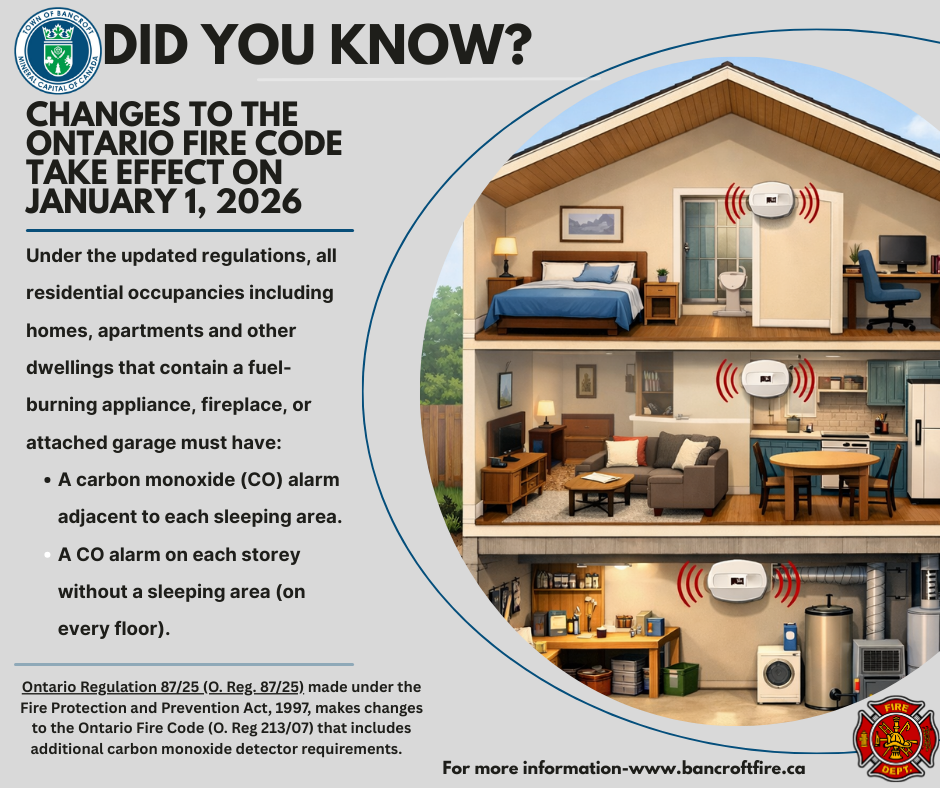
Homeowners and tenants in Ontario should be aware of important updates to the Ontario Fire Code taking effect January 1, 2026—new requirements for carbon monoxide (CO) alarms aim to enhance safety against this “silent killer.”
What’s Changing
- New Ontario Regulation 87/25 (Fire Code O. Reg. 213/07) expands CO alarm coverage in all existing residential buildings—homes, apartments, condos, and certain care facilities.
- Previously, CO alarms were only required near sleeping areas in homes with fuel-burning appliances.
- Under the 2026 update, if your residence has a fuel-burning appliance, fireplace, or attached garage, you’re now also required to install a CO alarm on every storey, even floors without bedrooms.
Coverage by Dwelling Type
Detached/Semi-Detached Homes, Townhouses, Cottages
Install CO alarms:
- Adjacent to every sleeping area (e.g., hallway near bedrooms)
- On every level of the home, including basements or lofts without bedrooms
Apartments & Condo Units
CO alarms required in:
- Hallways adjacent to each sleeping area
- Every storey of the unit
- Units located above, below, or next to a parking garage or a service room with fuel-burning equipment
Multi-Unit Residential & Care Facilities
CO alarms will also be mandatory in:
- Individual suites meeting above conditions
- Service rooms
- In some cases, public corridors heated by fuel-burning systems
Why This Matters
Carbon monoxide is colourless, odourless, and difficult to detect without alarms.
Symptoms of CO poisoning include headaches, nausea, dizziness, confusion, and—even at low levels—can be fatal.
Installing alarms per the new rules significantly improves early detection and can prevent tragedy.
Requirements for CO Alarms
- Certified: Units must meet Canadian standards (e.g., CSA 6.19, ULC S536/S537).
- Power Source: Hardwired, plug-in (with battery backup), or battery-operated.
- Placement: Follow manufacturer instructions—typically on ceilings or high on walls, away from corners and airflow sources.
- Maintenance: Recommend monthly testing, annual battery replacement, and full unit replacement every 5–10 years as per manufacturer recommendations.
Responsibilities: Homeowners, Landlords, Tenants
- Homeowners: Must install and maintain CO alarms wherever required.
- Landlords & Condo Boards: Legally responsible for installing, maintaining, and ensuring compliance—includes providing tenants with instructions.
- Tenants: Must not disable alarms and should report any issues immediately to their landlord.
Steps to Prepare Before January 2026
- Identify fuel-burning sources: Furnaces, fireplaces, hot water tanks, attached garages, or external heating systems.
- Plan placement: Map out where CO alarms need to be added (every storey and near bedrooms).
- Purchase compliant alarms with proper certification.
- Install ahead of time: Ensure full compliance before the deadline.
- Regular upkeep: Test regularly and maintain the alarms.
What Happens if You Don’t Comply?
Failure to follow the new CO alarm rules is considered an offense under the Fire Code. Municipalities can issue fines or administrative penalties for non-compliance.
Final Takeaway
By January 1, 2026, every Ontario residence with fuel-burning devices or attached garages must have carbon monoxide alarms not just near sleeping areas but on every storey—even those without bedrooms.
Homeowners and landlords are responsible for installation and upkeep. Tenants, do your part: never disable alarms and notify your landlord of issues.
A few alarms now could save lives later—protect your household with compliant, working CO alarms.